
Every year, millions of Muslims begin Ramadan with the same beautiful intention: “This year, I will finish the Quran.“ And every year, many of them fall behind by the second week, feel discouraged and quietly let the goal go.
If that sounds familiar, the problem was never your commitment. It was the lack of a clear plan. In this guide, you’ll learn exactly how to finish the Quran in Ramadan with a simple daily system, a prayer-based schedule, a plan for those who read slowly, and a head start you can begin right now, well before the month arrives.
Ramadan 2027 is expected to begin around 8 February 2027, subject to the sighting of the crescent moon. That gives you roughly eleven weeks to prepare, which is more than enough time to start strong.
In this guide:
- Why Ramadan and the Quran Go Together
- The Simple Math Behind Finishing the Quran
- Plan A: One Juz a Day
- Plan B: Four Pages After Every Prayer
- Plan C: If You Read Slowly or Are a Beginner
- Plan D: For Children and Families
- Your 8-Week Pre-Ramadan Warm-Up
- A Sample Daily Ramadan Schedule
- 10 Tips to Stay on Track
- Common Mistakes to Avoid
- Prepare for Ramadan with MualimulQuran
Why Ramadan and the Quran Go Together
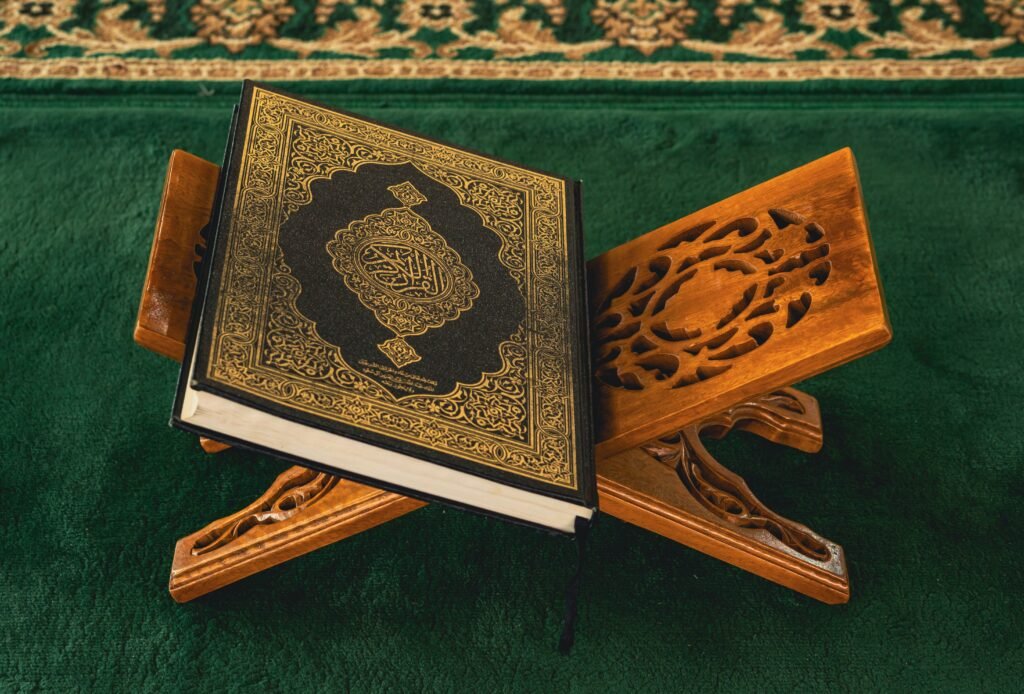
Ramadan is described in the Quran as the month in which the Quran was revealed (Surah Al-Baqarah, 2:185). It is also reported that the Angel Jibril would review the Quran with the Prophet ﷺ every Ramadan. That is why Muslims throughout history have made recitation the center of this month.
You can read more about the significance of the month in this overview of Ramadan. But beyond the history, there is a practical reason to set a Quran goal: Ramadan gives you a built-in rhythm of waking, praying, fasting and gathering, which makes it easier than any other month to build a daily reading habit.
The Simple Math Behind Finishing the Quran
A big goal feels impossible until you break it into small pieces. Here is the math, using the standard Madinah Mushaf, which has 604 pages and 30 equal parts called juz:
- 30 juz in 30 days means one juz per day
- 604 pages in 29 days (Ramadan is 29 or 30 days) means about 21 pages per day
- 21 pages across 5 daily prayers means about 4 pages after each prayer
Reading speed varies, but many people find that one juz takes roughly 30 to 60 minutes at a steady, clear pace. Spread through the day, that’s far more manageable than it sounds.
Tip: Plan for 29 days, not 30. This leaves you a spare day in case you fall behind or miss a day, and you may finish a day early.
Plan A: One Juz a Day
This is the classic plan and the easiest to remember.
- Read one juz per day, in order, from the first day of Ramadan
- Split it into two or three sittings: for example, one after Fajr, one after Dhuhr or Asr, and one after Isha
- Mark each day on a simple calendar or checklist
Best for: Readers who are already comfortable with the Arabic script and can read at a steady pace.
Plan B: Four Pages After Every Prayer
This plan builds recitation into your existing routine, so you don’t need to “find time.”
- Read 4 pages after each of the 5 daily prayers, which comes to about 20 pages a day
- Add one extra page after any prayer, or read a little more on weekends, to cover the 604 pages by the end of the month
- Keep your Quran beside your prayer mat so it’s always within reach
Best for: Busy people, working parents and students, because the plan attaches the habit to something you already do five times a day.
Plan C: If You Read Slowly or Are a Beginner
If reading the Arabic text is still a challenge, finishing the entire Quran in one month may not be realistic, and that is completely fine. A correct, thoughtful recitation is worth far more than a rushed one. Choose a goal that fits your level:
- Finish by listening: Follow along in the Mushaf while a clear reciter recites, which trains your ear and eyes together. You can listen on Quran.com, where you can follow the text as you listen.
- Set a smaller target: For example, finish the last juz (Juz Amma) or a set of surahs with correct pronunciation
- Improve fluency this Ramadan: Treat the month as a chance to build a strong foundation so that next Ramadan you can finish with confidence
- Learn with a teacher: A few weeks of guided practice can make your reading faster and more accurate before Ramadan begins
Starting with the basics is nothing to be embarrassed about. If you’re new to the Arabic letters, our Noorani Qaida course is built for exactly that, and our guide to the best tips to learn Noorani Qaida online shows you how to begin.
Plan D: For Children and Families
Children can take part in the Ramadan Quran goal too, with expectations that fit their age.
- Younger children: Aim to learn or revise a few short surahs, or read a page or two a day with a parent
- Older children and teens: Set a personal target, such as reading a juz every few days, and let them track it themselves
- Family circle: Read together for ten minutes after Maghrib or before Isha, taking turns
A simple wall chart with a sticker for each day makes the goal visible and exciting. If you want ideas on keeping children motivated, read our guide on how to help your child stay consistent with Quran lessons.
Your 8-Week Pre-Ramadan Warm-Up
The biggest secret of people who finish the Quran is that they don’t start on day one of Ramadan. They start weeks before, so the habit is already in place. Here’s a simple warm-up you can begin now.
Weeks 1 to 2: Build the habit
Read just one page every day at the same time. The goal is consistency, not volume.
Weeks 3 to 4: Increase gently
Move to two or three pages a day. Notice which part of the day works best for you.
Weeks 5 to 6: Sharpen your recitation
Revise the basic Tajweed rules and fix the mistakes you notice. If you’d like to strengthen your pronunciation, our Quran Tajweed course is designed for exactly this.
Weeks 7 to 8: Reach your Ramadan pace
Practice the daily amount you’ll need in Ramadan, such as 10 to 20 pages, so that the first day of the month feels familiar rather than overwhelming.
By the time Ramadan arrives, you won’t be starting from zero. You’ll be continuing something you’ve already built.
A Sample Daily Ramadan Schedule
Here’s an example of how a day might look. Adjust the times to suit your own routine and local prayer times.
- After Fajr: 4 pages, when the mind is fresh and quiet
- After Dhuhr: 4 pages, even a short sitting during a work or school break
- After Asr: 4 pages, or listen while preparing for iftar
- After Maghrib or Taraweeh: 4 pages, ideally after a short rest
- After Isha: 4 pages, or read a little more if you’re energized
If you attend Taraweeh prayers where a portion of the Quran is recited each night, you can also read that same portion beforehand, so you follow the recitation with understanding.
10 Tips to Stay on Track
- Set your daily target on day one: Write it where you’ll see it every day
- Use one Mushaf throughout: Your eyes remember the page layout, which speeds up reading
- Read after prayers, not “whenever”: Attaching the habit to salah makes it automatic
- Keep a visible tracker: A wall chart or checklist gives a small win every day
- Never skip a day entirely: Even two pages keeps the streak alive
- Catch up on weekends: If you fall behind, add a little extra on days you have more time
- Protect your sleep: A tired reader makes more mistakes and loses focus
- Reduce distractions: Put the phone on silent during your reading time
- Find a Quran buddy: Share your progress daily with a friend or family member
- Read with focus, not just speed: Pause to reflect on a verse that touches you, because the goal is connection as well as completion
Common Mistakes to Avoid
- Starting without a plan: Good intentions fade quickly without a daily target
- Starting too big, too late: Jumping from zero to a juz a day in week one leads to burnout
- Rushing and ignoring Tajweed: Speed without correct pronunciation defeats the purpose of recitation
- Reading only at night: Leaving everything for after Isha, when you’re exhausted, makes it easy to skip
- Giving up after a missed day: One missed day is a small gap, not a failure, so simply continue the next day
- Comparing yourself to others: Everyone’s pace and level is different, and your sincere effort is what counts
Prepare for Ramadan with MualimulQuran
If you want to finish the Quran this Ramadan with confidence, strong recitation is the foundation. At MualimulQuran, our classes are live and one-to-one, taught by qualified male and female tutors, with flexible timings that fit your schedule. We welcome children from age 6 and adults of every level, from first letters to Tajweed and memorization.
A few weeks of guided practice before Ramadan can make a real difference to your speed, accuracy and confidence. You can explore every option on our Quran courses page, and read about the benefits of learning Quran online if you’re deciding between classes and self-study.
Make This the Ramadan You Finish
You don’t need extra hours, a perfect voice or years of Arabic study. You need a clear plan, a steady habit and the right support, starting today rather than on the first night of Ramadan.
Ready to begin? Book a free trial class with MualimulQuran now, meet your teacher and enter Ramadan with confidence.
